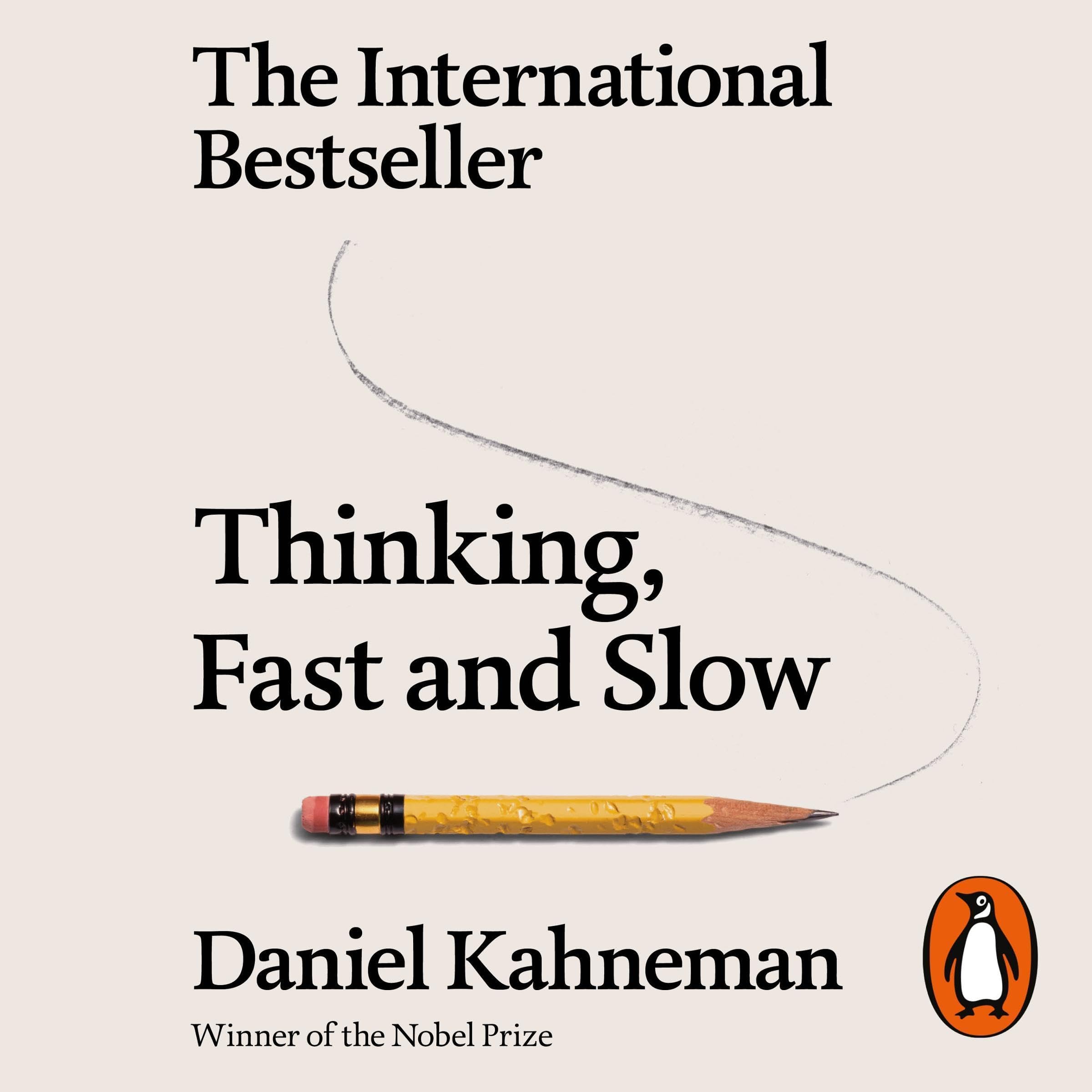
Thinking, Fast and Slow
Yes, it's long and sometimes dense, but if you make high-stakes decisions at work this Nobel-winning psychologist's account of System 1 and System 2 is the clearest way to stop predictable mistakes.
If you make decisions that affect budgets, teams or policy, you already know that good outcomes depend on thinking clearly; Thinking, Fast and Slow teaches you why your mind misleads you and how to catch it. Daniel Kahneman, a Nobel laureate in economic sciences, lays out the two systems that shape judgement and why intelligence doesn’t protect you from bias. ## What makes it worth it Kahneman's command comes from decades of experimental work with Amos Tversky and a Nobel Prize that marks this as work from a foremost authority; the book's core distinction between "System 1" (fast, intuitive) and "System 2" (slow, deliberative) is explained with real experiments and memorable examples, not just aphorisms. The book is heavily cited, won major awards and is available in multiple formats (hardback, paperback, ebook, audiobook), so it’s easy to fit into your reading habits. ## Where it falls short The book is long (≈512 pages) and methodical; chapters can feel repetitive and it isn't a quick how-to manual — readers looking for short actionable checklists will be impatient. If you make decisions at work, in policy or product and want a deep, evidence‑based map of cognitive biases, buy this; if you want a short practical playbook of decision hacks, look for a concise summary or a practitioner book instead.
£0
Buy nowBuy if
You make frequent, high‑impact decisions at work or in policy and want an evidence‑based framework to diagnose predictable errors in judgement.
Skip if
You want a short, practical checklist of decision hacks or a light read — this is a deep, research‑driven book that rewards sustained attention.
What we found
Author credentials
Daniel Kahneman — Nobel Prize in Economic Sciences (2002)
Core concept
Dual-process model: System 1 (fast, intuitive) and System 2 (slow, analytical)
Length
Approximately 512 pages (varies by edition)
Recognition
Winner: National Academy of Sciences Best Book Award; Los Angeles Times Book Prize; NYT top ten of 2011
Availability
Hardcover, paperback, ebook, audiobook (widely available internationally)
Accessibility
Thorough and evidence‑based but occasionally dense and repetitive
Ready to buy?
£0